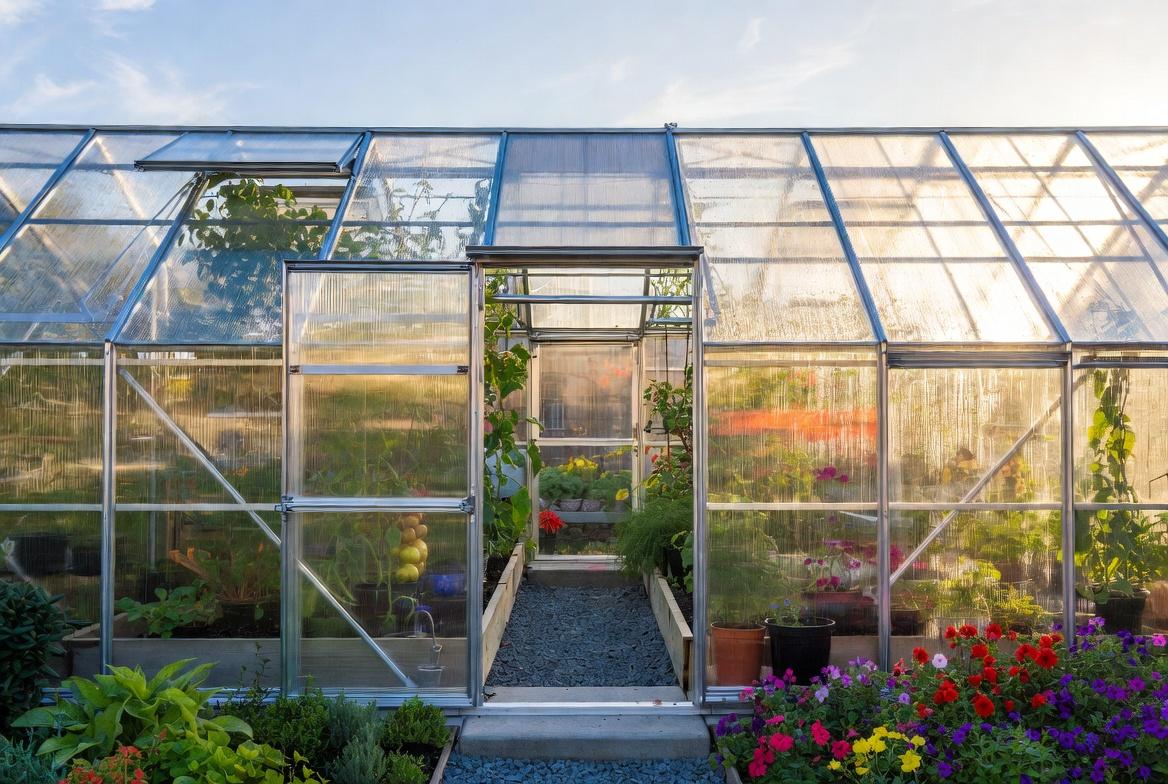
What Is a Polycarbonate Greenhouse?
If you've ever lost tomatoes to a late frost or watched your seedlings struggle through a cold spring, you already understand why a greenhouse matters. But not all greenhouses are built the same. Polycarbonate greenhouses have become the go-to choice for home gardeners and serious growers alike — and once you understand what makes them different, it's easy to see why.
A polycarbonate greenhouse uses multi-wall polycarbonate panels instead of traditional glass. These panels are made from a tough, lightweight thermoplastic that traps air between its layers, creating natural insulation. The result is a growing space that holds heat better, lets in the right amount of light, and stands up to weather that would shatter a glass pane in seconds.
Why Polycarbonate Beats Glass (Most of the Time)
Glass greenhouses look beautiful. There's no denying that. But beauty doesn't protect your peppers from hail. Polycarbonate does.
Here's what actually matters when you're choosing a greenhouse:
Insulation That Works Year-Round
Twin-wall and triple-wall polycarbonate panels trap air in channels between the layers. That trapped air acts like a thermal blanket around your plants. In winter, heat stays in. In summer, the panels diffuse intense sunlight so your plants don't cook. A twin-wall polycarbonate panel typically offers an R-value roughly double that of single-pane glass — meaning your heating costs drop, and your growing season stretches in both directions.
Light Diffusion, Not Just Transmission
Here's something glass can't do: scatter light evenly. Polycarbonate panels diffuse sunlight as it passes through, spreading it across your plants rather than focusing it in hot spots. This matters more than most people realise. Diffused light reaches the lower leaves on tall tomato plants, the shaded side of bushy peppers, and the seedlings tucked under a propagation shelf. Your whole growing space works harder.
Polycarbonate typically transmits around 80–90% of available light — enough for virtually any crop — while reducing the risk of leaf scorch on sensitive plants.
Impact Resistance That Actually Holds Up
Polycarbonate is roughly 200 times stronger than glass. That's not a marketing number — it's a material science fact. Hailstones that would crack a glass greenhouse bounce off polycarbonate. A falling branch that would shatter a pane leaves a polycarbonate panel unharmed. For anyone living in a climate with hard winters, unpredictable storms, or simply an occasional wayward football, this matters enormously.
Lightweight Construction
A polycarbonate panel weighs a fraction of what a glass panel of the same size does. This means the supporting frame doesn't need to be as heavy, installation is manageable without a professional crew, and you can often relocate or expand the structure without major engineering work.
The Different Types of Polycarbonate Panels
Not all polycarbonate is the same, and understanding the difference helps you make a smarter choice for your specific climate and growing goals.
Twin-Wall Polycarbonate
This is the most common type for home greenhouses. Two flat sheets of polycarbonate are connected by vertical channels, creating a single layer of trapped air. It's affordable, widely available, and sufficient for three-season growing in most temperate climates. If you're starting out or working with a modest budget, twin-wall is almost always the right call.
Triple-Wall Polycarbonate
Three layers, two air channels, significantly better insulation. Triple-wall panels are heavier and more expensive, but they make a real difference if you're growing through hard winters or heating your greenhouse with an electric heater and watching the electricity bill carefully. The extra investment pays back over time in lower running costs.
Multi-Wall and Corrugated Options
Some manufacturers offer four-wall or even five-wall polycarbonate for extreme climates. Corrugated single-layer polycarbonate is also available — it's lighter and cheaper but offers no insulation benefit, making it more suitable for cold frames or seasonal tunnel covers than a year-round greenhouse.
What Can You Grow in a Polycarbonate Greenhouse?
The honest answer: almost anything. But a polycarbonate greenhouse specifically excels in a few areas.
Vegetables and Salad Crops
Tomatoes, cucumbers, courgettes, aubergines, and peppers all thrive in the warm, sheltered environment a polycarbonate greenhouse provides. These are crops that need heat to produce well, and they'll reward you with harvests that simply aren't possible outdoors in cooler climates. Lettuce, spinach, and salad leaves grow faster under cover and can be harvested through winter with minimal heating.
Seedlings and Propagation
A polycarbonate greenhouse is a propagation powerhouse. Starting seeds six to eight weeks earlier than outdoor conditions allow gives you a genuine head start on the season. Hardening off young plants — gradually acclimatising them to outdoor conditions — is easy when you have a sheltered intermediate space.
Exotic and Tender Plants
Citrus trees, fig trees, bougainvillea, and other plants that aren't hardy in northern climates can be overwintered successfully in a polycarbonate greenhouse. You don't need tropical temperatures — just frost protection and reasonable light levels, both of which polycarbonate provides efficiently.
Year-Round Cut Flowers
Chrysanthemums, sweet peas, dahlias, and freesias can be grown out of season, giving you fresh flowers from your own garden when outdoor borders are bare. For hobby growers and small market garden operations alike, this is a genuinely valuable capability.
Choosing the Right Size
This is where most people make their only real mistake: going too small. A greenhouse that feels spacious when empty fills up faster than you expect. Here's a realistic guide.
A 6x8 foot greenhouse suits a casual grower who wants to start seeds, grow a few tomato plants, and overwinter some tender perennials. It's compact, affordable, and fits in most gardens.
A 8x12 foot greenhouse is where the hobby really opens up. You have room for a proper staging area, a propagation bench, and growing beds for full-sized crops. This is the sweet spot for most dedicated home gardeners.
A 10x16 foot or larger greenhouse starts to approach small-scale production. If you're growing for a market stall, a large family, or simply because you love plants unreservedly, this size gives you genuine capacity and the ability to zone your space for different temperature requirements.
Whatever size you choose, plan for the next size up. Greenhouse gardeners almost universally wish they'd gone bigger.
Key Features to Look For
When you're comparing polycarbonate greenhouse models, a few features separate the genuinely useful from the merely adequate.
Ventilation
Plants need fresh air. Without adequate ventilation, temperatures spike on sunny days, humidity builds up, and fungal diseases take hold. Look for roof vents — ideally automatic ones that open and close based on temperature — and side vents or louvre windows for cross-ventilation. A good rule of thumb: ventilation area should equal roughly 20% of the floor area.
Guttering and Water Management
A greenhouse collects a surprising amount of rainwater. Built-in guttering and downpipes let you capture that water for irrigation — a meaningful saving if you're watering regularly through summer. It also keeps the area around the base of the greenhouse from becoming waterlogged.
Door Width and Access
A standard single door is fine for carrying plants and tools in by hand. But if you want to bring in a wheelbarrow — and you will, eventually — you need a wider door or double doors. Check the door dimensions before you buy.
Foundation Options
Polycarbonate greenhouses can be installed on a concrete slab, on pressure-treated timber bearers, or on a metal base frame that anchors into the ground. Each has advantages. Concrete is permanent and solid. Timber is flexible and cheaper. A metal base frame is often the most practical option for a standard home garden installation.
Frame Material
Aluminium frames are the industry standard for good reason. They're lightweight, rust-proof, and require essentially no maintenance. Powder-coated aluminium looks better and resists scratching. Steel frames are stronger but need to be galvanised or coated to resist rust. Avoid untreated steel in any climate with significant rainfall.
Installation: What to Expect
Most polycarbonate greenhouse kits are designed for two people to assemble over a weekend. The panels are lightweight, the aluminium sections slot and bolt together logically, and the instructions — from reputable manufacturers — are clear enough to follow without professional help.
The most important part of installation isn't the assembly itself. It's the site preparation. Your greenhouse needs:
A level base — even a small slope causes alignment problems and makes doors difficult to operate. Spend time getting this right before you start building upward.
Good drainage — sitting water under or around a greenhouse encourages slugs, promotes rust at the base, and makes working inside unpleasant. Raise the base slightly if your site has heavy soil.
Maximum sunlight — position the greenhouse to receive sun from morning to afternoon. In the northern hemisphere, a ridge running east to west maximises light capture across the whole structure.
Wind shelter — a solid wall or fence nearby protects against wind-chill and structural stress, but shouldn't cast shade. A permeable windbreak hedge is ideal.
Maintaining Your Polycarbonate Greenhouse
Polycarbonate greenhouses are genuinely low-maintenance, but a little attention goes a long way.
Clean the panels annually. Algae and grime build up on polycarbonate surfaces over time, reducing light transmission. A soft brush, mild detergent, and a rinse with a garden hose is all it takes. Avoid abrasive cleaners or scouring pads — they scratch the surface.
Check the glazing seals. The rubber or aluminium strips that hold panels in place can work loose over time. Inspect them each autumn and press any lifted sections back into place before winter.
Keep the channels clear. The vertical channels in twin-wall and triple-wall panels should be sealed at top and bottom to prevent condensation and algae growth inside the panel. If seals have failed, replace them — replacement tape is inexpensive and easy to apply.
Lubricate door tracks and vent hinges. A small amount of silicone spray once a year keeps everything moving smoothly and prevents the kind of stiff, reluctant hardware that makes greenhouse access a frustration rather than a pleasure.
The Environmental Case for Polycarbonate
Gardening is inherently sustainable, but the materials we use matter too. Polycarbonate has a strong environmental case compared to glass. It's lighter, which means lower transport emissions. Its insulating properties mean less energy is needed to heat the growing space. And modern polycarbonate panels are recyclable at the end of their lifespan.
The extended growing season a polycarbonate greenhouse enables also has a real sustainability benefit: more of your own food, grown without the packaging, refrigeration, and transport miles of supermarket produce. Even a modest greenhouse can supply a household with salad crops, herbs, and vegetables across a significantly longer season than outdoor growing alone allows.
Is a Polycarbonate Greenhouse Right for You?
If you want to grow more, grow earlier, and grow things that simply aren't possible in your outdoor climate — yes. A polycarbonate greenhouse is one of the most rewarding investments a gardener can make.
It doesn't require a large garden. It doesn't require professional installation. It doesn't require expensive heating equipment for most year-round use in temperate climates. What it requires is a decent site, a free weekend, and the genuine enjoyment of having somewhere warm and sheltered to garden in any weather.
Whether you're a first-time grower curious about tomatoes or an experienced gardener ready to extend your season and expand your crops, a polycarbonate greenhouse gives you the structure to make it happen — reliably, efficiently, and for decades to come.
Explore our full range of polycarbonate greenhouse sizes, accessories, and base options to find the right fit for your garden and your growing ambitions.