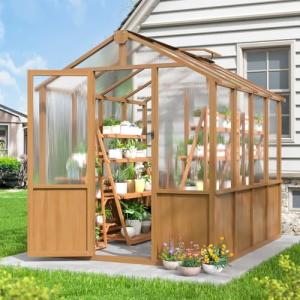
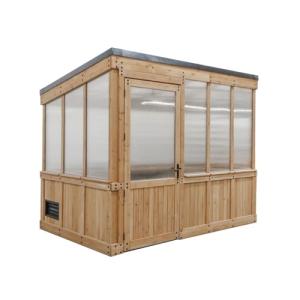
What Makes Wooden Frame Polycarbonate Greenhouses Different?
The Frame: Why Wood Still Wins for Many Growers
Wood has been used in greenhouse construction for centuries, and not just because it was the only option. Timber frames offer thermal properties that aluminum simply can't replicate. Wood is a natural insulator — it doesn't conduct cold the way metal does, which means frames made from cedar, redwood, or pressure-treated pine don't become frost bridges that pull heat out of your growing space during a hard winter freeze.
Beyond temperature performance, wood is easy to work with. You can drill into it, mount shelving, hang grow lights, attach trellises, and customize your interior without specialized tools or hardware. For gardeners who like to tinker, this flexibility is genuinely valuable. Want to add a second tier of potted plants? Screw in some brackets. Need to run irrigation lines along the ceiling? Attach some simple clips. Wood makes all of that easy.
There's also the matter of appearance. Wooden greenhouses photograph beautifully and blend seamlessly into residential landscapes. Neighborhoods with strict HOA guidelines or homeowners who care about curb appeal consistently prefer the look of a well-built timber frame over ribbed aluminum channels.
The Glazing: Polycarbonate Does What Glass Won't
Polycarbonate panels are where these greenhouses earn their keep from a purely practical standpoint. Modern multi-wall polycarbonate — typically twin-wall or triple-wall construction — delivers excellent light transmission while providing real insulation value. That combination is something single-pane glass can't offer without expensive additional heating infrastructure.
Here's what that means in real growing terms: polycarbonate diffuses sunlight as it passes through the panels, scattering it across your plants rather than focusing it in harsh direct beams. This diffused light reaches the lower leaves of tall plants, penetrates dense foliage, and reduces the risk of sunscald on heat-sensitive seedlings. For starting tomatoes, peppers, cucumbers, and leafy greens early in the season, this quality of light is genuinely beneficial.
Polycarbonate is also tough. It's virtually shatterproof compared to glass — an important feature in hailstorm-prone states across the Midwest, South, and Mountain West. Kids kicking a ball, falling branches, and the occasional strong gust won't leave you with a costly, dangerous cleanup. UV-stabilized panels resist yellowing and hold their light transmission over years of sun exposure.
Choosing the Right Size for Your Growing Goals
Wooden frame polycarbonate greenhouses come in a wide range of footprints, and selecting the right size up front saves a lot of frustration later. The most common residential sizes run from compact 6×8 starter models up to generous 12×20 and 14×24 structures suited for serious production.
Starter greenhouses (6×8 to 8×10) are ideal for hobbyists who want to extend their growing season by four to six weeks on each end — starting seeds indoors in late winter and keeping tender perennials alive through the first fall frosts. These fit comfortably on most suburban lots without requiring permits in most jurisdictions, though local building codes always vary and should be checked before purchase.
Mid-size greenhouses (8×12 to 10×16) offer room for a central workbench, dedicated growing benches along both sides, and enough vertical height to accommodate tall indeterminate tomato vines or small fruit trees in containers. This size range is the most popular for home gardeners who want a genuinely functional workspace rather than just a plant storage area.
Large-scale structures (12×20 and above) serve small homesteads, market gardeners growing for farmers markets or CSA programs, and serious hobby growers who want year-round production capability. At this scale, supplemental heating and ventilation equipment becomes part of the planning conversation, and the structural advantages of a well-built timber frame become even more evident — the wood absorbs moisture better than metal, handles expansion and contraction more quietly, and holds up well to the humidity that builds up in a busy growing environment.
Year-Round Growing Capability: What to Expect in Different US Climates
One of the most common questions buyers have is whether a wooden polycarbonate greenhouse can realistically extend the season in their climate zone. The honest answer is: it depends on the panel thickness and whether you add supplemental heat.
In USDA Hardiness Zones 7 through 10 — covering much of the South, Pacific Coast, and lower Southwest — a twin-wall polycarbonate greenhouse with no additional heating can comfortably extend growing through mild winters. Many growers in these regions successfully overwinter citrus trees, herbs, and cool-weather crops like lettuce and spinach without any supplemental heating whatsoever.
In Zones 5 and 6 — the Mid-Atlantic, Midwest, and Pacific Northwest — a greenhouse paired with even a modest propane or electric heater opens up legitimate year-round growing for cold-hardy crops and extends the tomato and pepper season deep into autumn.
In Zones 3 and 4 across the northern states and high-altitude regions, a well-insulated greenhouse with triple-wall polycarbonate and reliable heating creates a workable four-season growing environment, even when temperatures outside plunge below zero.
The wood frame contributes meaningfully to these outcomes. Studies of greenhouse heat retention consistently show that timber frames reduce thermal bridging compared to aluminum, which translates to lower heating costs over the course of a winter — a quiet but real advantage that adds up over years of use.
Key Features to Look for When Shopping
Panel Thickness and Wall Configuration
Twin-wall polycarbonate panels (typically 6mm) offer a good balance of light transmission and insulation for three-season and mild-climate four-season growing. Triple-wall panels (10mm or thicker) provide meaningfully better R-values and are worth the additional investment for gardeners in colder climates who plan to heat their greenhouse through winter.
Wood Species and Treatment
Cedar and redwood are the gold-standard choices for greenhouse framing because of their natural rot resistance and dimensional stability through the humidity cycles a greenhouse experiences. Pressure-treated lumber is a more affordable alternative that performs well when properly sealed and maintained. Look for manufacturers who use kiln-dried lumber — it's less prone to warping and shrinking after installation.
Roof Pitch and Snow Load Rating
For growers in the Midwest, Northeast, and Mountain West, roof pitch matters. A steeper pitch sheds snow load more effectively and reduces the risk of structural stress during heavy accumulation events. Most quality wooden frame greenhouse manufacturers publish their snow load ratings — this spec deserves attention before purchase if you're in a region that regularly sees significant snowfall.
Ventilation Options
Adequate airflow is critical to plant health and disease prevention. Look for greenhouses that include roof vents, and consider models that offer automatic vent openers as either standard or add-on equipment. Automatic openers use a thermal wax cylinder to push vents open when interior temperatures rise above a set point — a genuinely useful feature for gardeners who can't check in on their greenhouse multiple times a day during spring and summer heat spells.
Door Width and Access
A standard single door works fine for carrying in pots and flat trays, but a double-door configuration makes moving wheelbarrows, large containers, and bags of growing media dramatically easier. If you plan to work in your greenhouse regularly, wider access is worth prioritizing.
Setup, Maintenance, and Long-Term Care
Wooden frame polycarbonate greenhouses are designed for homeowner assembly, and most manufacturers ship them with detailed instructions and pre-drilled hardware packages. Most models in the 8×10 to 10×16 range can be assembled by two adults over a weekend with basic hand tools and a power drill.
Ongoing maintenance is straightforward. The wood frame benefits from an annual application of a UV-protective exterior wood sealant or stain, particularly on any exposed surfaces that receive direct sunlight and weather. Polycarbonate panels should be cleaned periodically with a mild soap solution and soft cloth — harsh abrasives and acetone-based cleaners will scratch the surface and compromise UV protection. Channel openings at the bottom of the panels should be kept clear of debris to prevent moisture and insect intrusion.
A well-maintained wooden greenhouse with quality polycarbonate glazing realistically lasts 15 to 25 years, with the panels themselves typically carrying manufacturer warranties ranging from 5 to 10 years against yellowing and degradation.
Why Wooden Frame Polycarbonate Greenhouses Are the Right Choice for Home Growers
At the end of the day, the choice of greenhouse comes down to what matters most in your specific situation. Metal frame greenhouses offer longevity with less maintenance. Glass greenhouses deliver maximum light clarity. But wooden frame polycarbonate structures bring together a set of qualities that no other category matches: natural insulation, diffused growing light, structural warmth that supports a comfortable working environment, visual appeal that respects the aesthetics of a home landscape, and the flexibility to customize and adapt your interior as your growing goals evolve.
For American home gardeners who want to grow more, start earlier, finish later, and actually enjoy spending time in their greenhouse — this category consistently delivers. Whether you're starting seeds for a kitchen garden in Zone 6, overwintering tropical plants in the Pacific Northwest, or growing salad greens through a Colorado winter, a wooden frame polycarbonate greenhouse gives you a real tool to work with, not just a pretty addition to the backyard.
Browse the collection, compare sizes and configurations, and find the structure that fits your space and your ambitions. Your growing season is about to get a lot longer.