Who Is This Greenhouse Actually For?
The answer is a surprisingly wide group. Weekend gardeners who've outgrown their seedling trays and want to extend the growing season by six to eight weeks on either end. Hobbyist orchid or succulent collectors who need a temperature-controlled microclimate. Small-scale vegetable growers in USDA zones 5 through 8 who want to start peppers and tomatoes in March rather than May. Even urban homesteaders in suburban plots who lack the square footage for anything larger but need genuine, reliable protection.
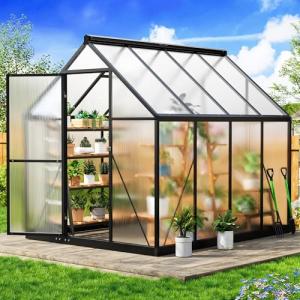
At 6 feet wide and 10 feet long, this structure gives you 60 square feet of interior growing space. That's enough for two or three 4-foot growing benches, a central walking path, and comfortable room to tend your plants without performing contortionist acts. It's categorically not a commercial greenhouse — but for a home gardener, it is serious square footage.
The black aluminum frame also distinguishes it from the sea of silver and white-framed greenhouse kits that dominate the market. For gardeners who've put effort into landscaping and garden design, the aesthetic detail matters. A matte black frame reads as intentional, considered, designed — not like temporary infrastructure you're embarrassed about when guests come over.
The Frame — Why Aluminum, and Why It Matters
One of the first questions any greenhouse buyer should ask is: what's the frame made of? The answer determines longevity, weather resistance, and structural stability in ways that matter enormously over years of outdoor use.
The Garvee greenhouse uses an aluminum alloy frame, and that's a substantive choice. Aluminum doesn't rust. Full stop. In a garden environment where it will be regularly exposed to moisture — from rain, watering, condensation, and humidity — a steel frame will eventually corrode unless it's carefully maintained. An aluminum frame simply won't. The anodization and powder coating that come standard on quality aluminum frames further protect against surface oxidation.
Beyond corrosion resistance, aluminum is lightweight relative to its structural strength. This has real practical value: the panels can be moved, repositioned, or adjusted without requiring two people and a crowbar. If you're assembling this on a weekend without hired help, that matters more than the spec sheet suggests.
The black finish on this particular model is worth noting specifically. Darker frames absorb more radiant heat from sunlight, which can modestly contribute to ambient warmth inside the structure. In colder climates, this is a passive thermal benefit. In hotter climates, it's something to factor in — though the ventilation features (covered below) address the flip side of that equation.
Polycarbonate Panels — More Than Just a Window Substitute
Most people know that greenhouse glazing matters, but fewer understand exactly why polycarbonate has largely replaced glass as the material of choice in modern residential greenhouses.
The panels on the Garvee 6x10 are twin-wall polycarbonate, which means each panel is actually two sheets of polycarbonate with an air channel running between them. This design provides insulation value that single-pane glass simply cannot match. The trapped air acts as a thermal buffer, helping the greenhouse retain heat overnight and on overcast days — exactly when your plants need it most.
Twin-wall polycarbonate also has a significant advantage glass doesn't offer: it diffuses light rather than transmitting it directly. Gardeners who've grown under direct glass know the problem — plants closest to the glazing can get scorched, while those further away are shaded. Diffused light distributes more evenly through the growing space, reaching plants at lower canopy levels with less risk of leaf burn at the top.
There's also the safety question. A glass panel that fails — whether from hail, a flying branch, or an accident — breaks into dangerous shards. Polycarbonate panels crack or bend under impact but rarely shatter. For anyone with children or pets using the garden, this is not a trivial consideration.
The UV protection built into quality polycarbonate panels is also worth flagging. Bare polycarbonate will yellow and degrade within a few years of UV exposure. Reputable panels are treated with UV inhibitors on the exterior surface that significantly extend lifespan. When evaluating any polycarbonate greenhouse, confirming UV protection is non-negotiable.
The Roof Vent — Ventilation Is Not Optional
Any enclosed growing space that receives direct sunlight will overheat on warm days. This is not a design flaw — it's physics. A greenhouse that traps heat effectively in winter will trap it effectively in summer too, unless you provide a mechanism to release it.
The Garvee greenhouse includes a roof vent, and its placement at the apex of the structure is correct engineering. Hot air rises and accumulates at the highest point of any enclosed space. A roof vent at that apex allows the accumulated heat to escape naturally — no fan required, no electricity consumed. This is the principle behind "stack ventilation," one of the oldest and most reliable climate management techniques in greenhouse design.
For the home grower, this roof vent is what separates a useful growing environment from a liability. Without it, you'd need to manually open the door on every warm day, lose whatever temperature buffer you'd built up, and risk plants overheating on days when you're not present. With it, the greenhouse self-regulates to a meaningful degree.
Experienced greenhouse growers often supplement roof vents with louver or side vents for cross-ventilation, and the Garvee structure is compatible with those additions if your climate demands it. But for most temperate climates, the built-in roof vent is sufficient for the 6x10 footprint.
The Sliding Lockable Door — Access, Security, and Convenience
The door design on a greenhouse is where a lot of cheaper structures fall apart — literally. Hinged doors that swing outward fight against wind. Doors with flimsy latches fail to seal. Handles that aren't ergonomically designed make daily entry and exit a minor frustration that adds up over hundreds of uses.
The Garvee greenhouse uses a sliding door with a lockable mechanism, and the choice of a sliding rather than hinged design is the right call for a structure this size. Sliding doors don't require clear swing space in front of the entrance, which matters when you have garden beds, pathways, or other structures adjacent to the greenhouse. They also don't catch wind the way a hinged door does.
The lockable element addresses a concern that serious gardeners have: plant theft. It's less rare than you'd think, particularly for urban and suburban gardeners who maintain valuable plant collections, overwintered tropicals, or started seedlings ahead of the growing season. A locked door isn't Fort Knox-grade security, but it's a meaningful deterrent against casual opportunism.
The sliding action also allows for partial opening — a practical feature when you want a couple of inches of passive ventilation without fully opening the structure. This level of control over airflow is something hinged doors don't offer.
Water Gutter Drainage — The Feature Most People Don't Think About Until It's Too Late
Here's the greenhouse feature that separates thoughtful design from an afterthought: water management.
When it rains, the polycarbonate panels channel water downward. Where that water goes matters significantly. Without a drainage system, it pools at the base of the structure. Pooled water creates multiple problems: it saturates the ground at the foundation, potentially undermining stability; it creates humid, damp conditions outside the structure that attract slugs and pests; and it can infiltrate the growing area, causing disease pressure at soil level.
The Garvee greenhouse includes water gutter drainage integrated into the frame. This channels precipitation away from the base in a controlled fashion. For gardeners who want to capture rainwater for irrigation — an increasingly common practice given water pricing and conservation awareness — this gutter system also makes collection straightforward. Position a rain barrel at the downspout point and you've turned rain into a free resource.
This drainage feature is present on higher-end greenhouse designs and absent on many budget alternatives. Its inclusion here is one of the practical engineering details that elevates the Garvee beyond entry-level structures.
Setup and Assembly — What to Realistically Expect
No review of a flat-pack greenhouse structure is complete without an honest assessment of the assembly experience.
The Garvee 6x10 arrives as a kit with pre-cut aluminum frame components and polycarbonate panels. The black aluminum frame sections connect via bolted joints rather than snap-fit plastic connectors — a detail that matters for long-term structural integrity, since bolted connections maintain their strength through temperature cycling and wind load in ways that plastic snap-fits do not.
Realistically, two people can complete the assembly in four to six hours over a single day. Solo assembly is possible for most steps but becomes genuinely difficult at the panel-placement stage, where having a second person to hold panels while you secure them saves significant time and frustration. If you're working alone, invest in a few clamps and don't rush the foundation anchoring stage.
The foundation requirement is worth planning for before the structure arrives. The greenhouse should be anchored to a level, stable surface. Concrete slabs, patio pavers, or treated timber frames all work well. Placing a greenhouse directly on turf without anchoring is not recommended — wind load on a 60-square-foot glazed structure is substantial, and any structure that can become a sail is a liability.
Level the foundation carefully. The polycarbonate panels are precision-cut, and if the base frame isn't level, you'll fight the panels at every step of installation.
Comparison Table — How the Garvee 6x10 Stacks Up
For shoppers considering multiple options in this category, here's an honest breakdown of how this structure compares to typical alternatives in its class:
| Feature | Garvee 6x10FT Black | Entry-Level Greenhouse (Plastic Frame) | Mid-Range Greenhouse (Silver Aluminum) | Premium Greenhouse (Glass) |
|---|---|---|---|---|
| Frame Material | Aluminum Alloy | Galvanized Steel / Plastic | Aluminum Alloy | Aluminum or Wood |
| Glazing Type | Twin-Wall Polycarbonate | Single-Layer PE Film or Thin Polycarbonate | Twin-Wall Polycarbonate | Tempered Glass |
| Roof Ventilation | Yes (Roof Vent) | Rarely Included | Sometimes Included | Yes (Multiple Options) |
| Door Type | Sliding + Lockable | Zippered Fabric or Basic Hinged | Hinged with Latch | Hinged, Multi-Point Lock |
| Water Gutter Drainage | Yes | No | Sometimes | Yes |
| UV Protection | Yes (Panel-Treated) | Limited | Yes | N/A (Glass) |
| Rust Resistance | Excellent | Poor to Moderate | Good to Excellent | Varies |
| Aesthetic Design | Black Frame (Contemporary) | Basic / Utilitarian | Standard Silver | Traditional |
| Impact Resistance | High | Low | High | Low (Shatters) |
| Approx. Price Range | Mid-Range | Budget | Mid-Range | Premium |
| Best For | Year-round home growing | Seasonal only | Year-round growing | Serious/Commercial |
The table makes clear that the Garvee sits at a genuinely competitive position — offering features (gutter drainage, lockable door, UV-treated polycarbonate) that entry-level structures omit, while coming in at a price point well below premium glass structures.
Seasonal Growing — What's Actually Possible in This Structure
Understanding what a 6x10FT polycarbonate greenhouse enables, specifically, helps justify the investment.
In USDA Zone 6 (covering a broad swath of the mid-Atlantic and Midwest United States, including areas around cities like Kansas City, MO and Philadelphia, PA), a polycarbonate greenhouse of this quality can extend your growing season from roughly April–October to something closer to March–November without supplemental heating, and to year-round growing of hardy crops with a small electric heater.
In Zone 7 (including areas like Richmond, VA and Raleigh, NC), winter growing of cold-tolerant crops — kale, spinach, arugula, chard, most herbs — is possible without any heating at all in mild winters. The insulating quality of twin-wall polycarbonate keeps nighttime lows several degrees above ambient outdoor temperatures.
In Zone 5 (Minneapolis, MN; Denver, CO; Chicago, IL), supplemental heating will be required for true winter growing, but spring season extension of four to six weeks is achievable without it, getting your tomatoes and peppers a meaningful head start before last frost.
For tropical plant overwintering — something increasingly popular as gardeners invest in citrus, bougainvillea, and tender perennials — even Zone 5 gardeners can maintain these plants through winter with a modest heating setup inside this structure.
Practical Tips Before You Buy
Siting the greenhouse correctly is the single most important decision you'll make. South or southeast-facing orientation (in the Northern Hemisphere) maximizes winter sun exposure. Avoid siting under deciduous trees — leaf debris clogs gutters and panels, and falling branches are a genuine risk to polycarbonate glazing.
Check your local regulations. In many municipalities across the United States, structures under a certain square footage don't require building permits. A 60-square-foot greenhouse typically falls within that threshold, but rules vary by city and county. If you're in a neighborhood with a homeowners association, review covenants before purchasing. Cities like Portland, OR; Austin, TX; and Seattle, WA have relatively permissive rules for garden structures; others do not.
Plan your electrical access before assembly if you intend to add lighting, heating, or an automated vent opener. Running an extension cord post-assembly is workable but messier than planning conduit access from the start.
Invest in a thermometer/hygrometer. The best thing you can do to use this greenhouse effectively is understand what's actually happening inside it on hot days, cold nights, and humid afternoons. A $20 digital thermometer/hygrometer will teach you more about your growing environment than any guide.
A Greenhouse That Earns Its Place
The Garvee Outdoor Polycarbonate Greenhouse with Roof Vent, Sliding Lockable Door, Water Gutter Drainage, and Black Aluminum Frame hits a mark that's harder to hit than it looks: genuinely useful, structurally credible, and aesthetically considered.
It's not a glass-and-cedar Victorian potting house. It's not going to win prizes at a garden design show. But for a gardener who wants to grow more, extend their season, protect their investment in plants, and do it all without a construction project or a five-figure outlay — this structure delivers on every count that matters.
The black frame, specifically, deserves credit. In a category full of utilitarian silver kits, this one looks like something you chose rather than something you settled for.
At 6x10 feet, it's the right size for the serious home grower who isn't running a market garden. Manageable to assemble, practical to use daily, effective at its core job of creating a protected microclimate for plants.
For anyone on the fence between this and a cheaper alternative: the gutter drainage and UV-treated polycarbonate alone justify the difference. Both are features you'll appreciate every season.